
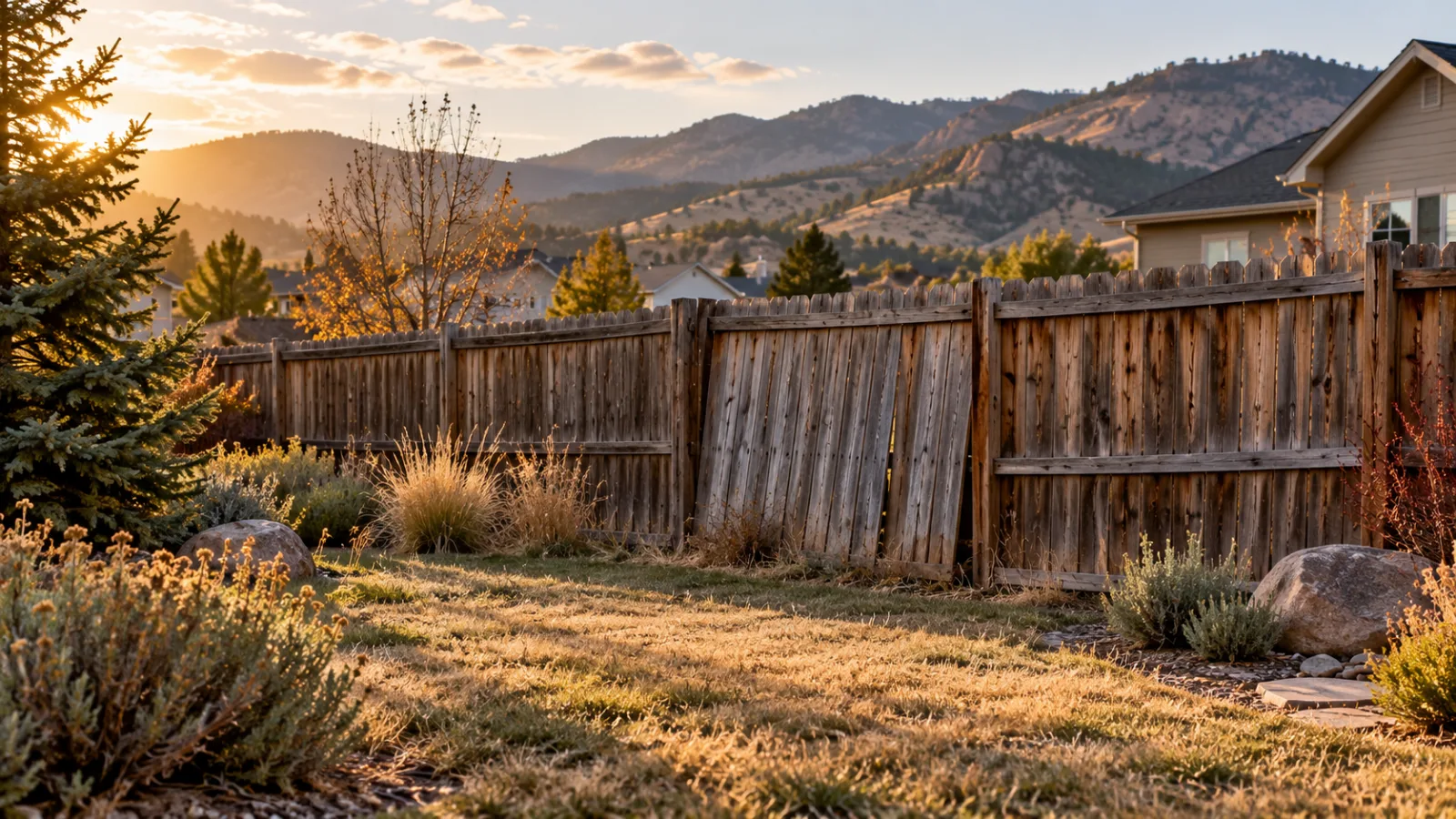
Most Valmont homeowners first notice fence trouble when a board starts to lean, a section warps, a rail works loose, or the gate stops latching, so they can consult a bathroom remodel cost guide. These problems rarely stay small. Moisture and movement spread to nearby boards and posts, and a quick fix can turn into a much bigger job. This guide covers what causes wooden fence damage, when wooden fence repair in Valmont, CO makes more sense than replacement, and what a proper repair involves.
Skillz Workz Inc. is a Boulder-based contractor providing fence repair, exterior repair, carpentry, and renovation services across the Boulder area, including Valmont.
Why Colorado Weather Is Hard on Wooden Fences
Wood fences in Boulder and Valmont deal with strong sun, snow, moisture, wind, and big temperature swings. Over time, these conditions weaken the fence and wear down its finish.
Common weather-related problems include:
-
Cracked or split boards
-
Warped boards
-
Loose nails and screws
-
Faded or peeling stain
-
Rot at or near ground level
-
Leaning posts
-
Gates that drift out of alignment
Moisture does the most damage where posts meet the ground. A post can look solid above grade while the buried section is already rotting. Freeze-thaw cycles add to the problem: water in the soil expands as it freezes, which can gradually push posts out of line.
Sun causes its own damage. Boards dry unevenly, then crack, warp, or shrink, which opens gaps and loosens fasteners. Wind adds stress too, especially on a fence that already has a weak post or a leaning section.
A quick walk along your fence line each spring and fall helps you catch these changes before the damage spreads to more sections.
Common Wooden Fence Problems in Valmont, CO
Most fence repairs involve one of four parts: posts, boards, rails, or gates.
Rotted or Loose Fence Posts
Posts carry the entire fence. When one rots or loosens, the panels attached to it can start to lean, even if the boards themselves are still in good shape.
If the damage is limited to one or two posts, replacing or resetting them usually solves the problem. If several posts are failing at once, there’s likely a bigger underlying cause, such as poor drainage or soil movement, and that needs to be fixed for the repair to last.
Warped or Broken Boards
Board problems are usually the easiest fix. As long as the rails and posts behind them are solid, broken, warped, or missing boards can be replaced one at a time.
Warping usually comes from repeated wetting and drying, long-term sun exposure, and the wood’s natural movement. Replace damaged boards early, before moisture and movement reach the boards next to them.
Loose or Sagging Rails
Rails tie the boards to the posts. They often loosen at the fastener points or crack where they meet a post. If the posts are sound, a loose rail can usually be reattached or reinforced instead of replacing the whole section.
Sagging or Misaligned Gates
Gates move far more than fixed panels, so they wear faster. Hinges loosen, latches shift, and the post holding the gate can start to lean.
If a gate drags or won’t latch, check the gate post before adjusting the hardware. Moving the latch on a leaning post only hides the problem for a while.
Repair or Replace: How to Decide
Repair usually makes financial sense when most of the fence is still solid.
Repair is usually the better choice when:
-
Only a few posts are damaged
-
Most boards are still solid
-
The rails are secure
-
The fence is generally straight
-
The damage is limited to one area
Replacement may make more sense when:
-
Multiple posts are rotted
-
Large sections are leaning
-
Boards are deteriorating along the whole fence
-
Rails keep separating
-
Earlier repairs keep failing
Age alone shouldn’t decide it. Condition matters more. An older fence with solid posts and rails can be well worth repairing, while a newer fence with poor drainage around its posts or structural damage may need more extensive work. If you’re weighing fence repair in Boulder or Valmont against a full replacement, an on-site inspection is the fastest way to get a clear answer.
What Affects the Cost of Fence Repair
Every fence is different, so the price depends on what the inspection finds. The main factors are:
-
How many posts need to be reset or replaced
-
How far rot has spread into rails and boards
-
The wood type, and how closely new boards need to match the old ones
-
Gate hardware and gate post condition
-
Access to the fence line and the slope of the yard
-
Removal and disposal of damaged material
-
Staining or sealing new wood to match the existing fence
What Proper Fence Post Repair Involves
Posts are the backbone of any wood fence. They carry the rails, boards, and gates. A good repair starts by finding out why the post failed: rot, shifting soil, standing water, impact damage, or decay below ground.
Because post replacement means digging, Colorado law requires contacting Colorado 811 at least two full business days before you dig (not counting the day you submit the request) so public utility lines can be marked.
Depending on the condition, the work may include:
-
Contacting Colorado 811 and waiting for utility lines to be marked
-
Removing the damaged boards and rails around the post
-
Pulling the failed post and its old footing
-
Checking the soil and drainage around the hole
-
Setting the replacement post plumb and in line with the existing fence
-
Reattaching the rails and boards
-
Checking the finished section for stability
A replacement post shouldn’t just look straight; it needs to be set solidly in the ground so the repair lasts. For reference, the City of Boulder’s fence permit guidance calls for posts set in concrete at least 24 inches below grade, using 4×4 wood rated for ground contact or naturally resistant to decay. This matters most at gate openings, because a post that moves will throw the gate out of line again.
Do You Need a Permit for Fence Work?
It depends on the fence height and where your property sits. Depending on the address, a Valmont-area home may fall under City of Boulder or Boulder County rules.
-
City of Boulder: Fences 7 feet tall or less are exempt from building permits. Fences in a floodplain, a wetland, a historic district, or on a landmarked property go through other approval processes before work begins.
-
Unincorporated Boulder County: Fences 6 feet and under don’t need a building permit, but any fence in a 100-year floodplain needs a Floodplain Development Permit.
If you live in an HOA community, check its fence guidelines too. When we inspect your fence, we’ll flag anything that may need an approval before work starts.
Wood Treatment and Maintenance
Even a new fence needs protection from the weather. A quality stain or sealer helps the wood absorb less moisture and weather more slowly. Reapply it when the finish starts to fade or wear.
A few habits make a big difference:
-
Keep soil, mulch, and plants from piling up against the lower boards
-
Make sure water drains away from posts instead of pooling around them
-
Point sprinklers away from the fence
-
Tighten loose hinges and fasteners as soon as you notice them
-
Walk the fence line each spring and fall to look for leaning, rot, and loose boards
Whoever repairs your fence should look at what caused the damage, such as drainage, soil, or plant growth, not just the damage itself. Otherwise, the same problem comes back.
Serving Valmont and the Greater Boulder Area
Valmont sits on Boulder’s east side, so working with a contractor who knows local homes and conditions makes the process easier. We provide fencing, decking, carpentry, exterior wood repair, and renovation services across Boulder and nearby communities.
Grade, soil, drainage, sun exposure, and how the fence was originally built vary from one property to the next. That’s why we look at all of them before recommending a repair or a replacement. One homeowner’s Google review describes our crew building a new fence along the north side of their property and staining their decks. You can read it and others on our reviews page.
Ready to have your fence looked at? Request a free estimate or call (720) 537-0781.
Frequently Asked Questions
How can I tell if my wood fence can be repaired?
If the damage is limited to one or two posts, a few boards or rails, or the hardware, the fence can usually be repaired. Widespread rot or weak spots along much of the fence often make replacement the better option.
What causes wooden fence posts to rot?
Water around the base of the post is the most common cause. Poor drainage, repeated wet and dry cycles, a worn-out finish, and age all contribute.
Can warped fence boards be replaced individually?
Yes, as long as the rails and posts behind them are still solid.
Do I need to call 811 before fence post repair?
Yes, if the work involves digging. Colorado law requires contacting Colorado 811 at least two full business days before digging so public utility lines can be marked.
When should I schedule a fence inspection?
Book one when you notice leaning panels, loose or split boards, sagging rails, or a gate that keeps sagging or drifting out of alignment.
Is it better to repair or replace an old fence?
Repair makes sense when most of the fence is still sound. Replacement may be the better option when rot, movement, or repeat failures affect several sections of the fence.
Restore Your Fence Before Damage Spreads
A damaged fence doesn’t always need replacing. The right wooden fence repair in Valmont, CO starts with checking the posts, rails, boards, and gates to see what the job really requires.
Skillz Workz Inc. provides fence repair, carpentry, exterior repair, and renovation services for homeowners in Valmont, Boulder, and nearby areas. Request a free estimate or call (720) 537-0781 to get started.