
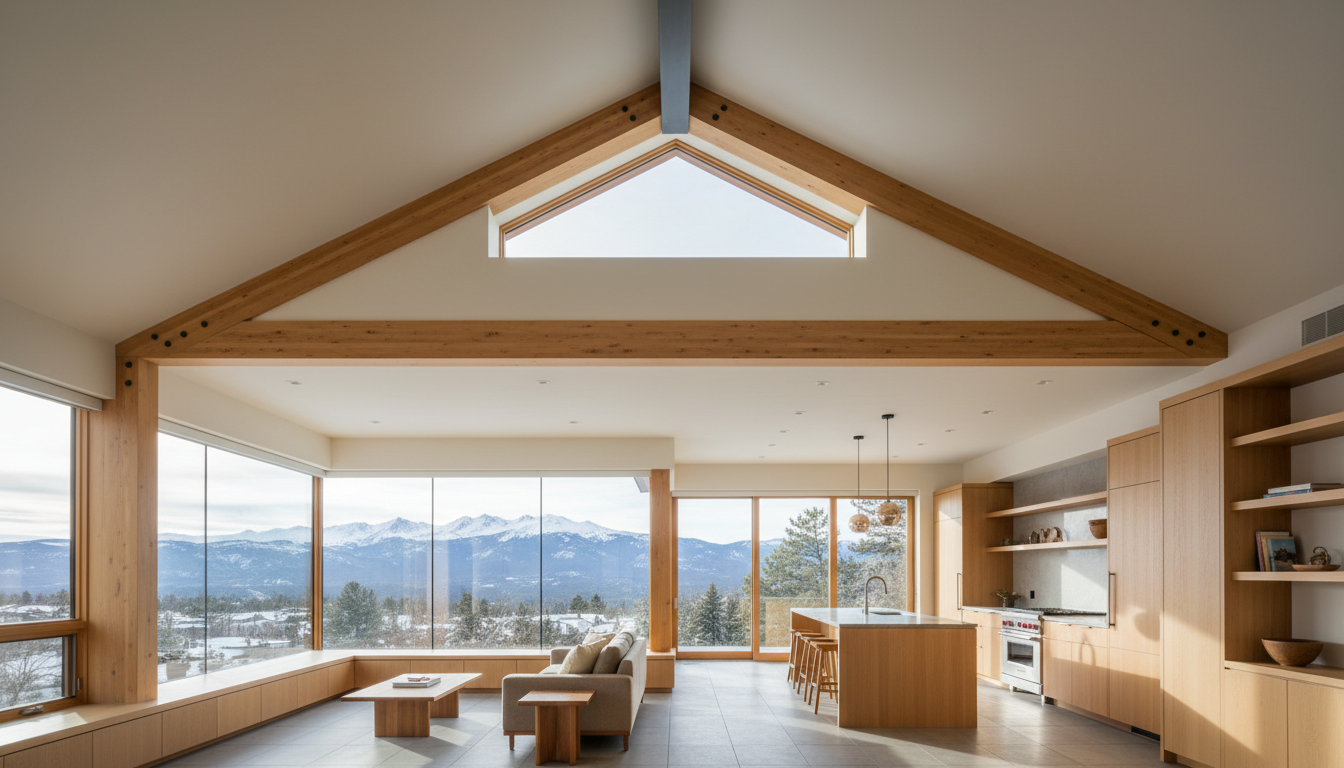
Ceilings usually go unnoticed until they feel low. Walls quietly define a home’s flow for decades, and suddenly, the limit isn’t square footage, it’s the structure.
That’s when homeowners consider advanced remodeling, such as vaulting: raising ceilings, removing walls, or adding natural light. In Boulder, where mountain views and sunlight matter, vaulting isn’t just a trend; its thoughtful design. Done well, it feels intentional; done poorly, risky. Here’s what it entails and why careful planning matters.
What Vaulting Really Means in Modern Remodeling
“Vaulting” isn’t a single project. It’s a structural rethinking of interior space.
In advanced remodeling, vaulting typically refers to altering the ceiling plane or removing interior barriers to create vertical and horizontal openness. The work often includes structural reinforcement, reframing, and mechanical adjustments.
This is not a cosmetic update; it is a structural and architectural transformation.
Vaulted Ceilings
Raising a flat ceiling into a pitched or cathedral profile alters both the visual height and the acoustic feel of a room. Exposed beams may become part of the aesthetic, though they must first serve structural purposes.
Removing Load Bearing Walls
Open floor plans remain desirable, but eliminating a load bearing wall involves redistributing weight through beams or posts. Steel often replaces wood for strength and span capacity. Structural engineering review is mandatory for this type of modification.
Skylights and Clerestory Windows
Light changes perception. Adding skylights or high clerestory windows introduces daylight without sacrificing privacy. However, roof penetrations demand a careful waterproofing and insulation strategy.
Advanced remodeling in this context means structural modification from within, not surface-level upgrades.
Why Boulder Homes Are Embracing Interior Vaulting
Boulder homes, particularly those built in the 1970s through the early 1990s, often feature compartmentalized layouts and standard eight-foot ceilings.
Over the past decade, buyer expectations in Boulder have shifted toward open layouts and natural light.
Buyers now expect natural light, visual flow, and adaptable living spaces. Mountain-facing windows and tall ceilings connect interiors to the landscape. Vaulting from the inside out aligns with that expectation.
Colorado’s climate also influences vaulting decisions due to snow load requirements and solar exposure. Colorado’s intense sun and snow load considerations mean roofing systems are already engineered for durability. That structural integrity can sometimes support thoughtful ceiling redesign, though each home requires evaluation.
Advanced remodeling in Boulder isn’t about excess. It’s about aligning older homes with contemporary living patterns.
Types of Vaulting Projects Homeowners Consider
Not every house can be vaulted in the same way. Roof structure, truss design, and load paths dictate what’s feasible.
Converting Truss Roofs to Vaulted Ceilings
Truss systems are engineered for efficiency, not open space. Modifying them requires structural redesign and reinforcement. In many cases, partial vaulting is more realistic than full cathedral conversion.
Beam Installation for Open Floor Plans
Steel or laminated veneer lumber beams redistribute weight when walls are removed. These beams may remain visible or be concealed within ceiling cavities. Either way, precision matters.
Hybrid Vaulting for Specific Rooms
Living rooms often receive the most attention, but kitchens and primary suites benefit as well. Partial vaulting, coffered ceilings, or tray ceilings can achieve visual lift without a full structural overhaul.
Advanced remodeling doesn’t demand uniformity. It demands clarity about goals.
Planning the Structural Work
Structural work requires both design vision and strict regulatory compliance.
Engineering analysis typically determines whether existing rafters can support modification. Load calculations account for snow loads specific to Boulder County. Once engineering approval is obtained, the permitting process follows.
Both inspections and proper construction sequencing are critical to project success.
Moisture control becomes critical once ceilings are opened. Insulation must meet current energy codes, and vapor barriers need careful placement. Poor execution here leads to condensation issues during the winter months.
At SkillzWorkz Inc, advanced remodeling projects involving vaulting are coordinated with licensed professionals and structural engineers. Transparency during permitting and inspections reduces surprises. Clients receive detailed scope outlines before framing begins, not after.
If you’re evaluating structural changes, schedule a consultation early. Early consultation helps prevent costly structural revisions later in the project.
Structural Safety and Code Compliance
Every vaulted conversion touches multiple systems. Electrical lines shift. HVAC ducts rerouted. Fire blocking must remain intact.
Building codes evolve, and ceiling modifications may trigger updates elsewhere. Smoke detectors, insulation R values, and even egress requirements can surface during review.
Some homeowners assume removing a wall is straightforward if it “doesn’t look thick.” Visual thickness alone does not determine whether a wall is load bearing. Load bearing walls often appear ordinary.
Advanced remodeling requires restraint as much as ambition.
Design Impact and Property Value
Does vaulting increase home value? Likely, though not automatically.
Buyers respond to volume and light. High ceilings create perceived square footage without expanding the footprint. In competitive Boulder neighborhoods, perceived spaciousness influences offers.
Still, resale depends on execution quality. Visible structural shortcuts undermine confidence.
Living Rooms
A vaulted living room becomes an anchor space. Large windows and exposed beams create architectural interest without excessive ornamentation.
Kitchens
Removing a dividing wall between the kitchen and dining area enhances functionality. Island layouts benefit from overhead clearance.
Primary Suites
Vaulted ceilings in bedrooms shift the atmosphere. Air feels different. Light enters from unexpected angles.
Before committing, review similar homes in your area. Compare pricing and design consistency. Advanced remodeling should align with neighborhood expectations, not exceed them to the point of diminishing returns.
Cost Factors and Budget Considerations
Structural work costs more than cosmetic upgrades. Labor drives much of the expense.
Engineering fees, permit costs, temporary supports, and beam materials add up quickly. Finish selections such as wood beams, recessed lighting, and trim detail influence final numbers.
Budget ranges vary widely. Partial vaulting may sit in the mid five figures, while extensive structural redesign can move higher depending on roof configuration and finish level.
Hidden cost pitfalls include:
- Underestimating electrical rerouting
- Ignoring insulation upgrades
- Overlooking temporary relocation during construction
A tailored estimate is more reliable than generalized pricing.
Selecting the Right Remodeling Partner
Vaulting projects reveal the difference between general renovation and true advanced remodeling expertise.
Look for licensed and insured contractors with structural modification experience. Ask about engineering partnerships. Request references from similar projects.
Questions worth asking:
- How are temporary supports handled?
- Who manages inspections?
- What contingency allowances are built into the budget?
Clarity now prevents tension later.
Managing Construction Expectations
Homeowners should expect dust and construction noise during the structural modification phase.
Framing adjustments require demolition before improvement becomes visible. Timelines fluctuate slightly due to inspection scheduling. Weather can influence roofing modifications.
It’s worth asking yourself: can you live in the home during construction? In some cases, yes. In others, temporary relocation makes sense.
Advanced remodeling rewards patience. Structural changes aren’t cosmetic weekend projects.
Before and After: Subtle but Transformative
Walk into a room with eight foot ceilings. Then step into a vaulted to twelve or fifteen feet with natural light cascading from above. The shift isn’t merely visual. It’s atmospheric.
Rooms feel more open, sound disperses differently, and shadows soften.
Yet restraint remains key. Not every space benefits from extreme height. Proper proportion and architectural balance are essential to achieving a cohesive result.
When vaulting integrates with proportion, materials, and structural integrity, it elevates the entire home. When it’s forced, it feels disconnected.
Conclusion
Vaulting from the inside out represents a measured form of advanced remodeling. It asks homeowners to look beyond finishes and reconsider the structure itself.
In Boulder, where light and landscape shape daily living, interior openness continues to gain appeal. Structural changes require engineering, compliance, and thoughtful design alignment. They also require a team that understands sequencing and risk.
If your ceilings feel limiting or your layout restrictive, consider what’s possible. Start with analysis, not assumption. Contact SkillzWorkz Inc for a structural vaulting consultation and explore how your existing framework might support something more expansive.
Space isn’t always about adding square footage. Sometimes it’s about reshaping what already stands.
FAQs
How much does it typically cost to raise or vault ceilings in a Boulder home?
There’s no clean number.
Some projects land in the mid five figures. Others move much higher once structural beams, engineering, and finish work stack up. Roof structure plays a major role. Truss systems are more complicated to modify than stick framing.
Then there’s mechanical relocation. Ductwork rarely stays put when ceilings move.
It’s rarely a “simple” job. And anyone who gives you a quick square-foot estimate without seeing the framing should raise questions.
Can I remove a structural wall safely to open up my living space?
Possibly. But it starts with engineering, not demolition.
Load-bearing walls carry weight from above. Removing one without proper support risks sagging or worse. Usually, a beam replaces the wall. Sometimes steel. Sometimes engineered lumber. That beam needs correct bearing points at each end.
It can absolutely be done. Just not casually.
Open floor plans look effortless when finished. They are not easy to build.
What permits are required for ceiling vaulting or structural remodeling in Boulder?
Structural work almost always requires permits. Framing, electrical adjustments, and inspections along the way.
Boulder’s building department pays attention to snow loads and energy code compliance. Insulation upgrades often become part of the scope once ceilings are opened.
Permits can feel like a delay. They’re also protection. Buyers notice when work was done properly. Appraisers do too.
Skipping them tends to resurface later, usually at the worst possible moment.
How will vaulting ceilings affect my home’s energy efficiency?
More volume means more air to heat.
In winter, warm air rises. Without proper insulation and airflow planning, comfort can suffer. Ceiling fans help. So does thoughtful HVAC design.
That said, natural light often improves with vaulting. South-facing windows in Boulder can offset heating needs during the day.
Energy impact isn’t automatically negative. It just requires planning.
Are there design options to make vaulted ceilings feel more spacious without major construction?
Yes, and sometimes they’re enough.
Paint ceilings slightly lighter than walls. Extend trim or vertical paneling upward to draw the eye. Use tall cabinetry or bookcases to emphasize height.
Lighting matters more than people realize. Uplighting can visually “lift” a ceiling without touching framing.
True vaulting changes structure. Visual height can often be achieved with design restraint.