
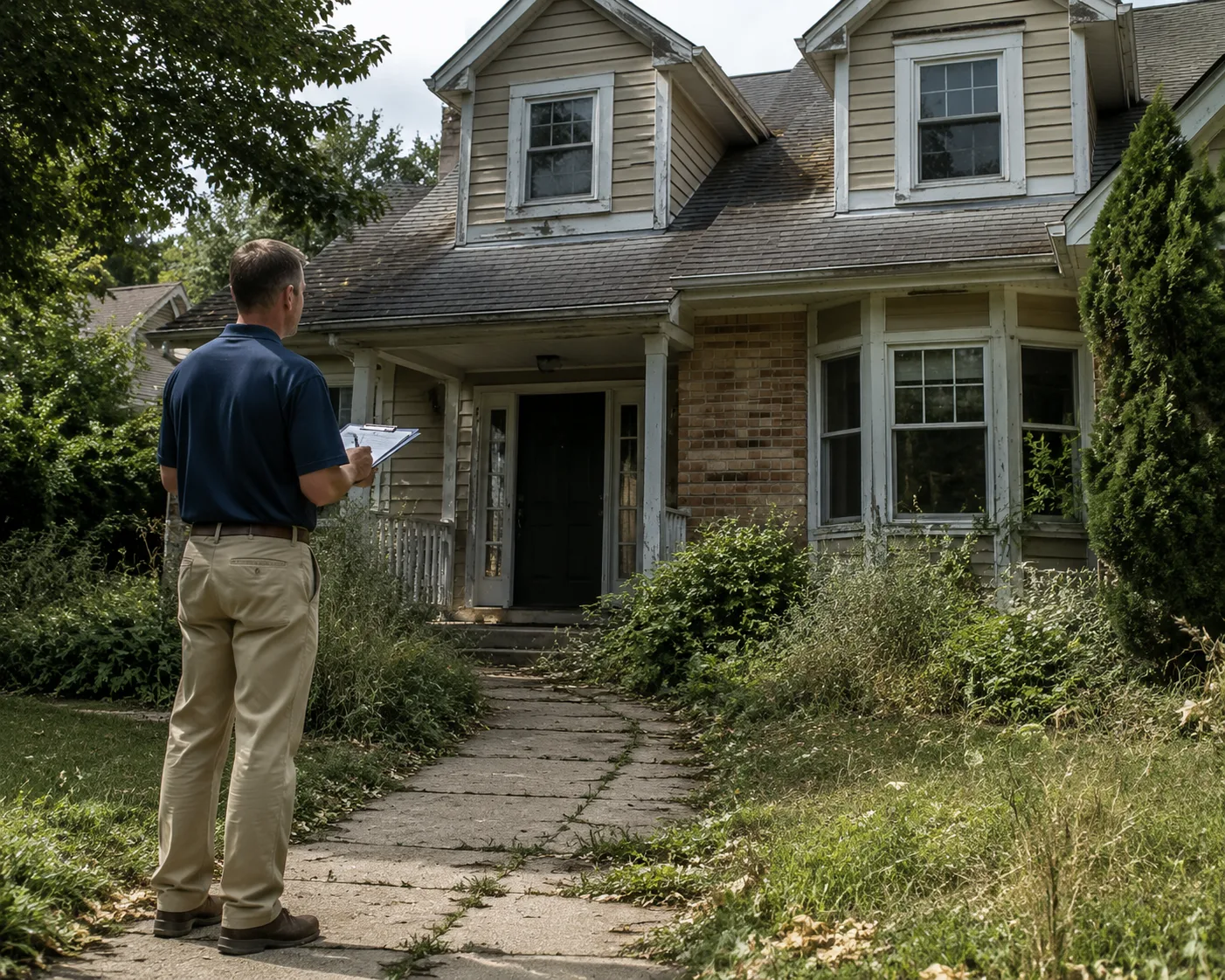
Discover what devalues a house most, from poor DIY work and deferred maintenance to bad renovations, outdated systems, and curb appeal mistakes, which can be improved by learning about exterior home remodels for curb appeal.
What Devalues a House Most? The Real Hidden Costs
If you’re getting ready to sell, you’ve probably already repainted a wall or two and maybe swapped out a light fixture. Cosmetic stuff. But the things that actually knock dollars off your sale price usually aren’t the things you’d guess.
Homes sit on the market for months sometimes, and sellers rarely know why. It’s rarely the paint color. It’s what’s underneath.
Quick answer:
Poor workmanship, deferred maintenance, and structural neglect do the most damage to a home’s value followed closely by unpermitted DIY work, aging systems, and a front yard that hasn’t been touched in years. Buyers pick up on these things fast, and it shows up in their offer.
A few things worth knowing before you list:
● A botched DIY job often costs more to fix than it would have to just hire someone in the first place.
● Bold, personal design choices shrink your buyer pool, even when the materials are expensive.
● Buyers tend to mentally double the cost of any deferred maintenance they spot.
● Turning a bedroom into part of an open living space can quietly tank your appraisal, even if it looks great.
● This applies whether you’re selling next month or just want the house to hold its value for years to come.
What Are the Top Things That Devalue a House?
Unapproved renovations, neglected upkeep, overly personal finishes, odd layouts, weak curb appeal these are the usual suspects. And buyers notice them faster than most sellers expect, often within the first few minutes of a showing.
There’s a common assumption that any renovation adds value. It doesn’t always work that way. Some upgrades actually make a home harder to sell, especially when they don’t line up with what buyers in your area are actually looking for.
Amateur work tends to read as a red flag rather than a selling point. Uneven tile, a garage conversion nobody pulled a permit for a buyer looking for something move-in ready sees that and starts doing math in their head.
And that math usually isn’t kind. Buyers don’t just subtract the cost of the fix. They pad it, because they’re also pricing in the hassle and whatever else they might find once they start digging.
Before you list, walk through the house like you’re the buyer, not the owner. Deal with the structural and mechanical stuff first the dining room table can wait.
How Does Deferred Maintenance Destroy Property Value?
A small, cheap fix left alone long enough turns into a big, expensive one. A roof leak you ignore for a couple of winters can rot the trusses underneath it. Drywall starts to buckle. Mold shows up where you can’t see it.
It’s tempting to put off a repair because it feels like you’re saving money right now.
But neglect compounds. Water heaters don’t usually give you a warning they just fail, often flooding a utility closet and ruining hardwood baseboards on their way out.
And once a buyer spots one outdated system, they start questioning everything else. Crumbling caulk around the tub makes them wonder what the wiring looks like. That kind of doubt is hard to undo once it sets in.
Keep records of your routine service calls, even the boring ones. A folder of HVAC inspection receipts does more to reassure a buyer than any amount of talking. And if something’s already gone past the point of a quick patch soft wood, water stains, that kind of thing our restoration and renewal services can get ahead of it before it becomes a negotiating chip.
Why Do Over-Personalized Finishes Hurt Your Sale?
A really specific design choice the kind that reflects exactly who you are is also, unfortunately, the kind most buyers won’t want to inherit. A hand-tiled mosaic or a neon kitchen might be exactly what makes the house feel like yours. It also shrinks the pool of people who’ll want it as-is.
Which makes sense, honestly. Everyone wants their home to feel like them.
But that’s the problem a space built entirely around your taste naturally excludes anyone whose taste is different. That built-in aquarium wall might be your dream feature. To the next family walking through, it’s a project they didn’t ask for.
The material quality doesn’t really matter here. Even genuinely expensive wallpaper gets torn down fast if the buyer just doesn’t like it.
Before you list, take the temperature down a notch in your boldest rooms. A coat of warm, neutral paint tends to pay for itself many times over it’s the same resale-minded thinking we bring to every kitchen and bath project we take on.
Can Poor Renovations and Bad DIY Work Lower Home Value?
Yes and often more than sellers expect. An unpermitted or amateur modification usually needs to be redone by a professional just to make the house safe and legal again. A shoddy electrical splice or uneven flooring install rarely gets past a home inspection.
The appeal of a DIY project is obvious: it looks like you’re saving on labor.
But a bathroom remodel gone wrong can lead to leaks that cost more to fix than the original job would’ve cost to do right. Tutorials are great for the visible parts and terrible at flagging the structural details that actually matter.
Same goes for knocking down a bedroom wall to open things up. It might look great in photos, but if it means losing an official bedroom count, your appraisal takes the hit appraisers care about legal bedroom counts, not open floor plans.
Pull permits for anything structural, electrical, or plumbing-related. It’s not just a legal box to check it’s proof to a future buyer that the work was actually done right. As a certified general contractor, we handle every permitted structural and interior renovation with the paperwork sorted from day one.
Repair vs. Replace: Evaluating Home Upgrades
| Upgrade Category | DIY Risk Level | Impact on Home Value | Practical Verdict |
| Interior Painting | Low | High (if neutral) | Safe for careful DIY. Fixes cosmetic flaws cheaply. |
| Plumbing Fixtures | Medium | Moderate | Hire a pro for major leaks. DIY is fine for simple faucet swaps. |
| Structural Walls | Extreme | Massive Loss (if botched) | Never DIY. Always hire licensed contractors and pull permits. |
| Flooring | High | High | Bad flooring screams cheap. Hire professionals for hardwood or tile. |
| Electrical Panels | Extreme | Massive Loss | Illegal to DIY in most areas. Buyers will demand a certified fix. |
Wondering which flooring is worth the investment before you sell? See our full breakdown of best flooring options for Boulder, CO homes.
Does Neglected Curb Appeal Actually Drive Buyers Away?
It can, and sometimes before they even get out of the car. Peeling paint and an overgrown yard read as a warning sign buyers assume if the outside’s been neglected, the inside probably has too.
It’s a common mistake sellers pour money into the kitchen and forget about the front porch entirely.
Sometimes it costs them the showing altogether. A buyer pulls up, takes one look, and just doesn’t bother going in. You never even get the chance to make your case.
A tidy, welcoming exterior does the opposite it builds trust before anyone’s even inside.
A weekend of power washing, hedge trimming, and a fresh coat of paint on the front door goes a long way for not much money. And if the fence is what’s dragging things down, our decks and fences team can handle that.
How Do Outdated Systems Lower Your Asking Price?
A thirty-year-old furnace might work fine day to day, but a buyer doesn’t see that they see a replacement bill they’ll have to write soon after moving in.
It can feel unfair, honestly, when the thing still does its job.
But age matters just as much as function. A roof with curled shingles or noticeable granule loss can be enough for a lender to hesitate on financing. Old galvanized plumbing causes similar headaches.
And this is where sellers lose real money. A buyer will ask for a $20,000 credit on an HVAC system that would only cost half that to replace, simply because they can.
Better to replace an aging system on your own terms than let it become leverage in someone else’s negotiation. And if there’s an unused basement or garage sitting on outdated wiring or plumbing, that space could be doing more for you worth a look at our basement and garage conversion work.
The 3-Step Valuation Protection Framework
Before investing in home improvements, use this framework to protect your equity. It helps you prioritize the right upgrades.
Step 1: Safety and Structure Audit
Inspect your home for water damage, foundation cracks, and electrical issues. These problems can become major dealbreakers. Address safety concerns before cosmetic upgrades.
Step 2: Neighborhood Baseline Check
Review recent local sales to understand buyer expectations. Compare your home’s features with similar properties in your area before making upgrades. Upgrading two levels beyond your immediate neighbors is a trap. You will rarely recoup that premium investment.
Step 3: The Neutralization Sweep
Identify any highly specific color palettes, custom hobby spaces, or niche permanent fixtures throughout the house. Plan to revert these spaces back to a broad, neutral state. Your goal is a blank canvas. Leave the architectural magazine covers to the professionals.
What Most People Get Wrong About Home Upgrades
There’s an assumption that every upgrade comes back to you dollar-for-dollar at closing. It usually doesn’t. An $80,000 kitchen in a neighborhood full of $300,000 homes creates a mismatch that appraisals just won’t support, no matter how nice it looks.
A pool is another one people get wrong. Plenty of buyers see it as a chore rather than a perk insurance costs, chemical upkeep, and a safety concern if there are kids around.
Building something nicer than everything else on your street rarely pays off the way people hope.
You’re usually better off spending on bringing things up to the local standard rather than beyond it. Most buyers want a house that just works that matters more to them than marble countertops in a starter home. For projects that go beyond a single room, take a look at our whole-home renovation work.
Final Thoughts
Figuring out what’s really hurting your home’s value takes a bit of honesty about its current condition mechanically and cosmetically. Hoping a buyer won’t notice an unpermitted DIY job or a roof that’s overdue tends to backfire once negotiations start.
A little work up front usually saves a lot more in lost equity later.
Walk through your home the way an inspector would. Tone down the personal touches, fix the visible stuff like sagging gutters, and put structural issues ahead of anything cosmetic.
If you need licensed help getting there, Skillz Workz Inc can take care of it properly. Request a free estimate and get ahead of the issues that actually cost you at closing.